At peak right now: Apples, Blue Crab, Peppers, Grapes. Head to a farmers market or your CSA to find them fresh.
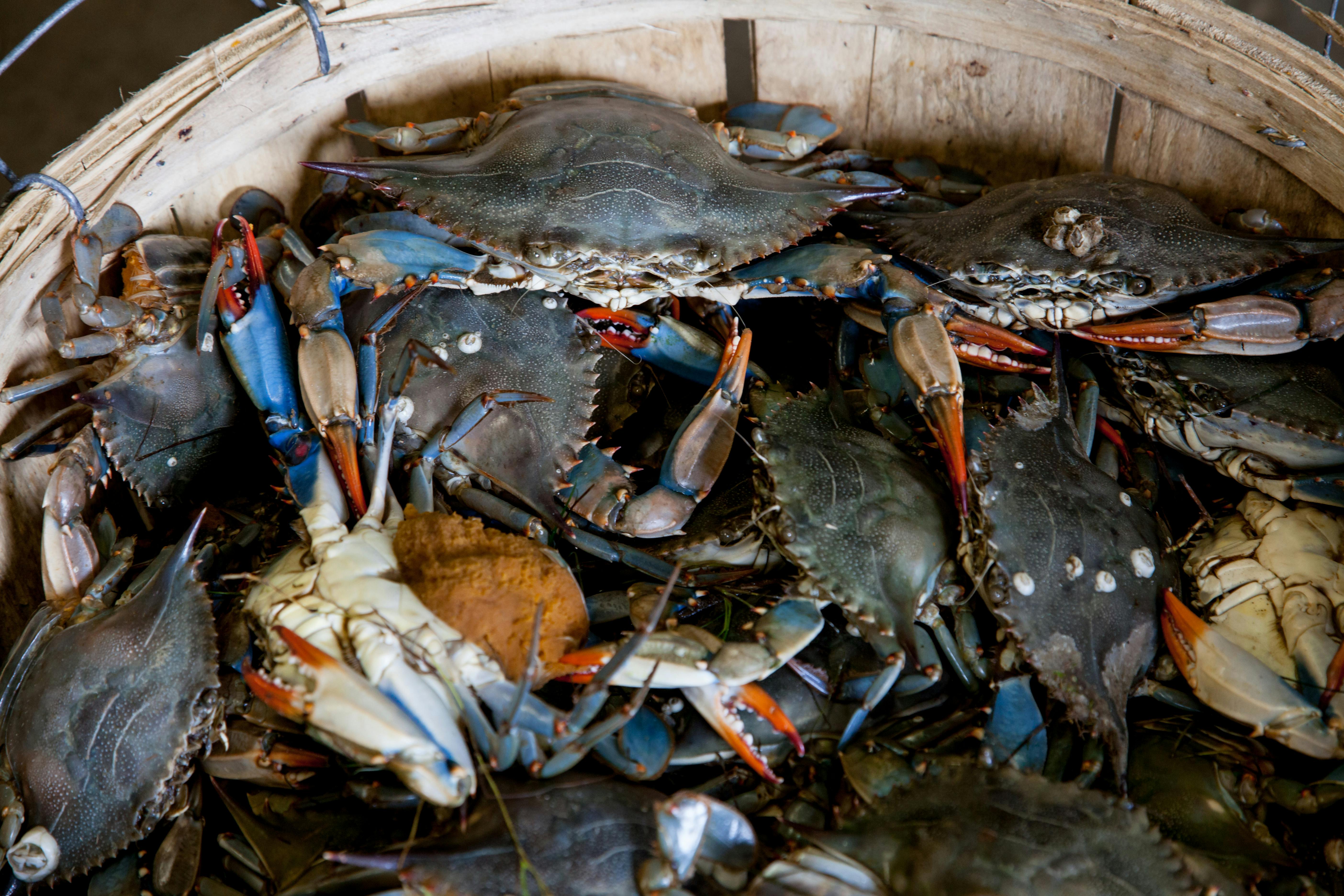
Blue crabs spend the winter buried in the mud at the bottom of the Chesapeake, dormant and waiting. By May they're moving again, and the watermen are out on the water before most people are awake, working crab pots from Rock Hall down to Tangier Sound. The season runs through November, but it doesn't stay the same from month to month. What you're eating in May is a different experience than what you're eating in August, and people who grew up picking crabs around a newspaper-covered table know this without being able to explain exactly why.
Soft crabs come first. In late spring, usually May into June, blue crabs begin molting their shells as they grow, and there's a narrow window of hours between when the old shell comes off and when the new one hardens. Watermen who know their crabs can spot the ones about to molt, called peelers, and pull them before that happens. What you get is a soft shell crab you can eat whole, fried in a pan with butter, or tucked into a sandwich. The soft shell season doesn't last long and it doesn't come back in the same way later in the year, so when they're showing up at places like the Lexington Market or a farmstand running a Thursday seafood pickup, that's the moment to pay attention.
By August the crabs have had a full summer in warm, food-rich water and they're heavy with meat. A number two jimmy in August feels completely different than a number two in May. The claws are packed, the body is dense, and if you've done this before you can feel the weight before you even crack anything open. Females caught in late summer are often carrying fat in the apron as well, which some people prize. The crabs migrate south and into the saltier water near the mouth of the Bay as the season goes on, and that southern tier, worked by Virginia watermen and the Maryland fleet that follows the crabs, tends to yield some of the biggest hauls of the year in August and September. A steamed dozen from a waterfront carry-out in Grasonville or Crisfield in late August, dumped on a table with Old Bay and a roll of paper towels, is a specific thing that no other time of year and no other place quite matches.
The season tapers off in October as water temperatures fall and the crabs start moving down and out of the shallows. By November the harvest is thin and the prices reflect it. Processors who pick crabmeat by hand, many of them on the Eastern Shore, finish up their run and the fresh picked meat in the refrigerator case starts to disappear. The crabs are back in the mud by December, somewhere under the cold water of the Bay, and the whole thing starts over again the following spring.
A few producers worth knowing about this week.
Founded in 2021, Whitetails Farm in Clarksburg brings ten acres of sunflowers to Montgomery County, with a quarter-mile trail winding through the blooms. The field is open through early September, noon to 6 pm, and the farm also hosts events and welcomes photographers looking to shoot among the flowers. It's a straightforward, family-run destination on Piedmont Road worth penciling in before summer winds down.
Running every Sunday morning from April through December under the Jones Falls Expressway, Baltimore Farmers' Market & Bazaar is Maryland's largest producers-only market, drawing more than 100 vendors to the streets around Saratoga and Hopkins Place. Expect a full morning's worth of browsing: farm-fresh produce, prepared foods, live music, and the kind of crowd that takes its grocery runs seriously. Doors open at 7 a.m., so early risers get first pick.
Red Wiggler Care Farm in Germantown has been doing something quietly remarkable for 30 years: growing organic vegetables on Montgomery County land while creating real, meaningful employment for adults with developmental disabilities. Their CSA program connects members with sustainably farmed produce while directly supporting an inclusive workplace model that goes well beyond the typical farm stand mission. If you want your food dollars to fund both good growing practices and good jobs, this is a strong place to put them.
Manger Packing Corporation has been making sausage and cured meats in Baltimore since 1858, which puts them in operation before the Civil War ended. Their product line runs from half smokes and chorizo to fresh and smoked sausages, along with their St. Mary's County corned hams, which you can find at a handful of Southern Maryland vendors including Chaptico Market and WJ Dent & Sons. Walk-in trade is welcome at their Franklintown Road facility.
Sudlersville Meat Locker has been a fixture on Queen Anne's County's Eastern Shore since 1996, operating as a USDA-inspected family butcher out of a small Main Street shop in Sudlersville. They offer custom processing alongside retail cuts sourced from locally raised animals, and their weekly in-store specials draw a loyal crowd on Saturdays. If you're looking for a butcher with deep roots in the region and more than two decades of hands-on experience, this is a good place to start.
On Trappe Creek Farm, an Eastern Shore certified organic farm, we grow a variety of vegetables. We try to have sweet corn, tomatoes, peppers, egg plant, cucumbers, yellow and green squash, melons, and
Know a farm, market, or maker we're missing?
Submit a Listing